


Innovations
Purposeful Progress, Engineered Around How You Work
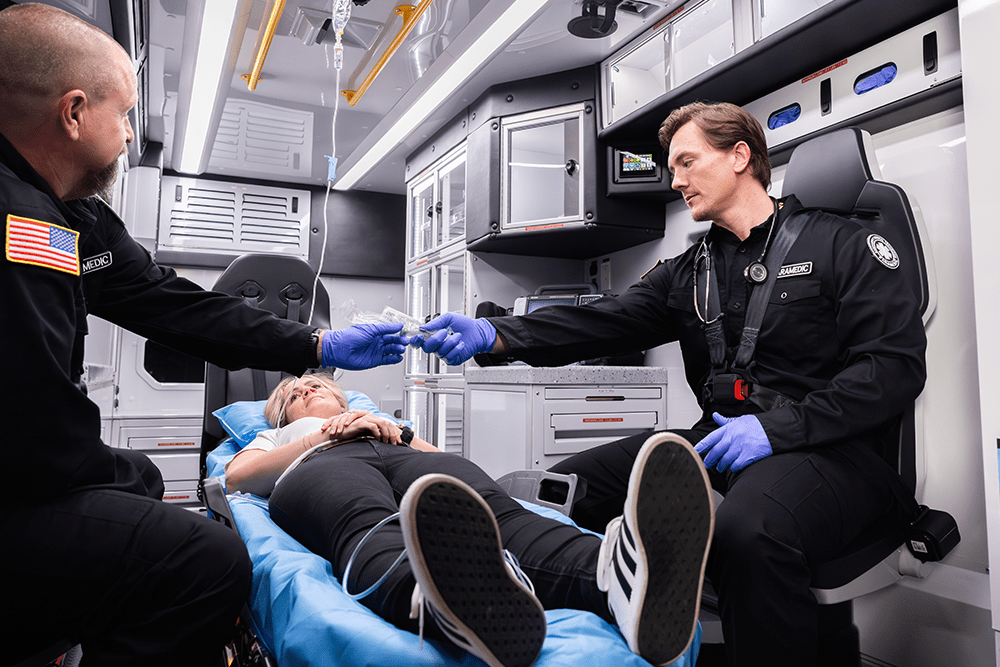
Innovation is about purposeful progress. We focus on solving real EMS challenges through intentional design, disciplined engineering, and continuous improvement. Every innovation we introduce is evaluated by one standard: does it improve safety, usability, comfort, or reliability for crews and patients in the field?
Our approach begins with listening. We learn from EMS professionals, study real workflows, and understand the demands of long shifts and high-stress calls. That insight guides design decisions across the entire ambulance, with systems such as seating, climate control, electrical architecture, and storage engineered as integrated solutions rather than standalone features.
By designing around how you actually work and move, we avoid adding complexity without benefit. The result is an ambulance shaped by real-world use, reinforcing our commitment to thought leadership, intentional design, and solutions engineered for you.
Featured Ambulance Innovations
Our innovations are engineered to work together as a complete ambulance environment. Each system addresses real EMS challenges while supporting safety, efficiency, and confidence. Select an innovation below to learn how it supports the way you work.
FX Action™ Seat
A purpose-built ergonomic seating system that allows medics to remain safely restrained while maintaining full access to the patient and equipment.
HVAC System
A high-performance climate control solution engineered specifically for the patient compartment, with region-specific package options to deliver consistent comfort in extreme heat or cold.
MMC Electrical System
An intelligent multiplex control platform that simplifies electrical architecture, centralizes control, and improves system awareness while reducing cognitive load in high-pressure environments.
Clever Cabinetry
An aluminum storage system designed around EMS workflows, placing critical equipment within reach and sight while enhancing safety, durability, and efficiency.
Each innovation is part of a broader system approach, reinforcing how our ambulances are intentionally designed to support real-world EMS operations from the inside out. Together, these features represent meaningful advances in how ambulances support the people who use them every day.
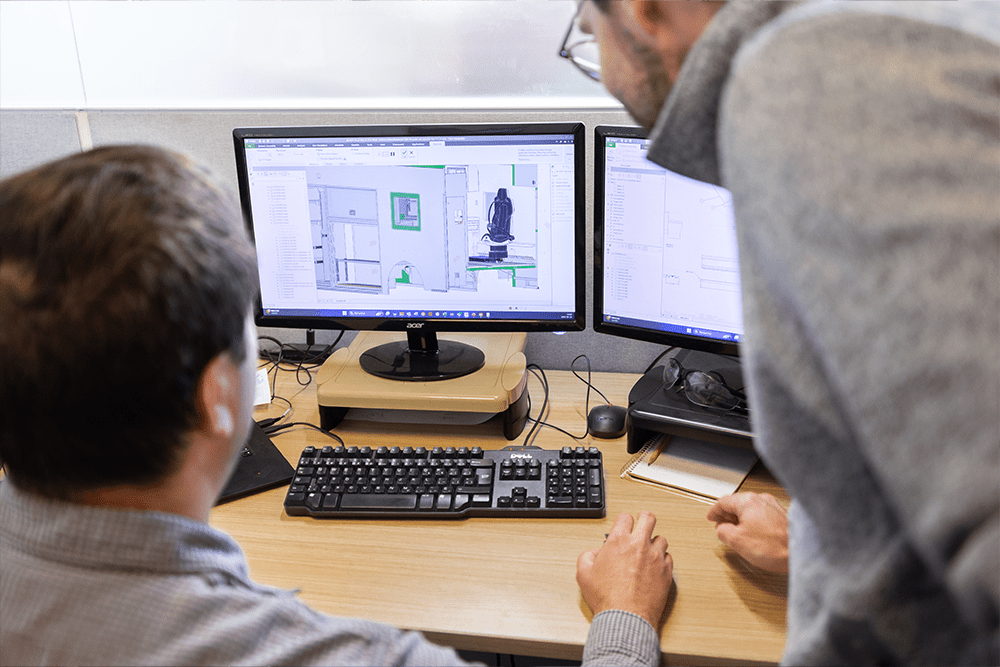
An Integrated Approach
Innovation at Demers extends beyond individual systems. Many important design decisions are built into every ambulance we produce, improving performance, efficiency, and reliability across the entire vehicle.
Across our lineup, we integrate smart, efficiency-driven technologies that support long-term performance and reduce total cost of ownership. For example, EcoSmart features such as lightweight construction, anti-idling technology, and an optional aerodynamic roof design help reduce fuel consumption, operating costs, and environmental impact without compromising durability or performance.
Collectively, our innovations reflect a systems-focused approach to design that improves fleet efficiency and delivers lasting value throughout the ambulance’s life cycle.
Your Ambulance Innovation Questions, Answered
This section provides additional context on how innovation is defined, developed, and validated at Demers. These answers are intended to help you better understand how our approach to innovation supports real-world EMS operations, long-term reliability, and consistent performance across our ambulances.
How does Demers define innovation in ambulance design?
We define innovation as purposeful progress. Every innovation must solve a real EMS challenge and improve safety, usability, comfort, or performance without adding unnecessary complexity.
What industry gaps has Demers intentionally solved through innovation?
Demers focuses on designing for EMS rather than adapting automotive platforms. We prioritize ergonomics, crew comfort, and system integration while avoiding feature overload that adds complexity without benefit.
How are Demers innovations developed?
Innovations are shaped by continuous feedback from EMS professionals, engineering-led refinement, and validation through testing. Improvements are rolled into future builds as standards whenever possible.
Are these innovations available across all Demers ambulances?
Many innovations, such as Clever Cabinetry, the MMC electrical system, and EcoSmart technologies, are standard across Demers ambulances. Others are integrated into specific models or platforms based on operational needs and response environments. Our model pages indicate which innovations are included as standard and which are available as options.
How does Demers ensure innovations are safe and reliable?
We ensure every innovation is safe, reliable, and ready for real-world EMS use through rigorous testing and validation. Our ambulances are tested to the most stringent applicable standards, enabling delivery across multiple regions and operating environments while consistently meeting or exceeding customer requirements.
More than 95% of testing is performed in-house by our dedicated testing and certification team. Conducting testing internally allows us to closely control quality, validate performance early, and adapt testing protocols to specific customer needs or regional standards when required.
When specialized testing is needed, we partner with certified independent laboratories, including PMG Technologies and the Center for Advanced Product Evaluation (CAPE). These facilities support advanced testing such as climatic chamber validation, electromagnetic compatibility testing, and SAE compliance.
All testing is conducted using the strictest known methods applicable to ambulance manufacturing, and vehicles are built to meet standards including FMVSS, KKK-1822-F, or CAAS GVS, as well as AMD and NTEA requirements. This disciplined approach ensures our innovations are not only thoughtfully designed but thoroughly proven for safety, durability, and long-term performance.
How do Demers’ innovations support long-term durability and value?
Lightweight materials reduce wear and fuel consumption, modular systems simplify service, and continuous improvements help extend product relevance and lifecycle value. These innovations are supported through our authorized dealer network, with access to OEM parts and knowledgeable technical support throughout the life of the ambulance.