


Preventive Maintenance
Proactive Care For Your Ambulance

Ambulance preventive maintenance is essential to keeping emergency vehicles safe, reliable, and ready for service. Unlike standard vehicles, ambulances operate in high-demand, stop-and-go environments where systems are under constant stress. Regular preventive maintenance helps identify wear early, reduce unexpected failures, and protect the vehicle’s long-term performance.
At Demers Ambulances, preventive maintenance is not an afterthought. It is built into how our ambulances are designed, engineered, and supported, with the goal of helping departments maximize uptime, control costs, and extend the service life of their vehicles. On this page, you will find detailed checklists to help you maintain the life of your ambulance and more.
Recommended Ambulance Maintenance Schedule
We have developed comprehensive preventive maintenance checklists to help support the long-term performance and service life of your ambulance.
View the checklists below to help guide routine inspections and ongoing care.
Checklists to Maintain the Life of Your Ambulance
- Inspect tires for wear and check air pressure
- Inspect and lubricate door switches if needed
- Test emergency warning lights
- Test and inspect the backup alarm
- Clean and inspect the backup camera
- Clean and inspect the interior camera
- Clean and inspect all screens, including LCD and Vista monitors
- Clean the inverter/charger, check DC cables, and tighten connections
- Inspect stretcher retention system
- Check for loosened or worn suspension components
- Check for leaks at suspension fittings
- Lubricate door switches with Moovit penetrating lubricant
- Inspect and clean the standard heating system if required
- Inspect the suction device
- Inspect the siren speakers
- Clean and check the battery connections and perform a load test
- Lubricate the conversion batteries’ sliding tray
- Inspect oxygen systems to ensure there are no leaks
- Inspect seat belts and latches for wear and/or malfunction
- Inspect safety net webbing and anchors for wear and/or malfunction
- Inspect stretcher and backboard fastening systems.
- Inspect and lubricate rear flip-up step swivels
- Lubricate door handles and inspect them for wear and/or corrosion
- Inspect and lubricate door locks, including lock barrels
- Inspect, clean, and lubricate door hinges
- Inspect, clean, and lubricate weather strips
- Check the spare tire pressure
- Inspect all electrical panel connections
- Clean and inspect battery isolator connections
- Inspect all chrome vent grilles and repair if needed
- Inspect anchor buttons for the primary rail/hook retention system
- Check emergency door release latches
- Inspect coolant lines, fluid levels, and antifreeze strength
- Clean body and door drain openings
- Clean and wax all interior surfaces (aluminum, ABS, fiberglass)
- Inspect and tighten quick-release oxygen bottle brackets
- Inspect and reset all 110V AC outlets and repair if needed
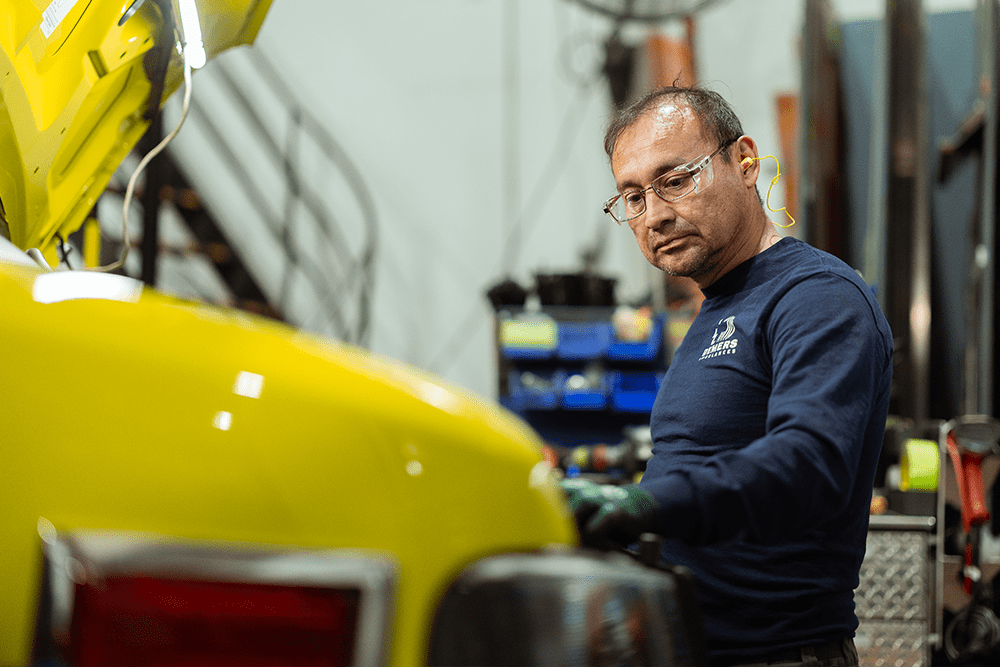
Why Preventive Maintenance Matters
Preventive maintenance helps departments move from reactive repairs to proactive care. When performed consistently, it supports:
- Improved vehicle reliability and readiness
- Reduced unexpected downtime and costly repairs
- Safer operation for crews and patients
- Longer service life and better total cost of ownership
Demers ambulances are designed with preventive maintenance in mind, using feedback from EMS professionals and real-world operating conditions to prioritize serviceability, access, and system consistency.
What to Know About Preventive Maintenance
These frequently asked questions are designed to help you understand why ambulance preventive maintenance matters and how proactive care supports reliability, safety, and long-term performance.
What is ambulance preventive maintenance?
Ambulance preventive maintenance is a structured approach to regularly inspecting, servicing, and maintaining vehicle systems before failures occur. It focuses on identifying early signs of wear, addressing minor issues, and ensuring systems continue to operate as designed before a problem occurs.
Why is preventive maintenance especially important for ambulances?
Ambulances operate differently from standard vehicles. They experience frequent stops, heavy electrical loads, constant use of onboard equipment, and long hours in varied environments. Preventive maintenance helps manage this added stress by ensuring critical systems remain reliable during emergency responses.
Consistent maintenance reduces the risk of unexpected failures that can impact response readiness and patient care.
What systems are typically addressed during ambulance preventive maintenance?
Ambulance preventive maintenance commonly focuses on systems that experience constant use, including electrical and multiplex systems, lighting, HVAC and environmental controls, doors and hardware, interior components and restraints, suspension and ride performance, and structural elements subject to vibration and daily wear.
Proactively maintaining these systems helps prevent minor issues from becoming major repairs.
How does preventive maintenance differ from ambulance repair?
Preventive maintenance is proactive and scheduled, focusing on inspections, adjustments, and routine servicing to keep systems operating properly. Ambulance repair is reactive and addresses component failure or damage after an issue occurs.
Preventive maintenance helps reduce the frequency and severity of repairs by catching problems early, supporting longer system life and more predictable vehicle performance.
How often should ambulance preventive maintenance be performed?
Preventive maintenance intervals vary based on usage, operating environment, mileage, and service conditions. High-call-volume or high-mileage units often require more frequent inspections and service.
Departments should follow our guidelines above and work with our authorized service partners to develop a preventive maintenance schedule that reflects real-world use for their specific needs.
How does ambulance design affect preventive maintenance?
Ambulance design plays a significant role in how easily preventive maintenance can be performed. Demers ambulances are engineered for serviceability, with consistent layouts, accessible components, and systems that can be efficiently inspected and maintained.
This intentional approach supports faster inspections, clearer diagnostics, and more effective long-term maintenance.
Who should perform ambulance preventive maintenance?
Preventive maintenance for our ambulances is best performed by our authorized dealer partners who are trained on our vehicle systems, layouts, and service requirements. Our partners understand how our ambulances are engineered and are equipped to follow approved maintenance procedures, identify early signs of wear, and support long-term system integrity.
Working with an authorized dealer partner ensures that preventive maintenance is completed in accordance with the ambulance’s original design and supported by factory guidance throughout its service life.
How does preventive maintenance support long-term reliability and cost control?
Regular preventive maintenance helps extend the service life of critical systems, reduce unexpected breakdowns, and avoid costly repairs caused by deferred maintenance. Over time, this approach supports better uptime, more predictable operating costs, and improved confidence in vehicle readiness.
Preventive maintenance is one of the most effective ways to protect the long-term value of an ambulance.